

Content
Learn about content — words, imagery and other media put on individual webpages — and content strategy.

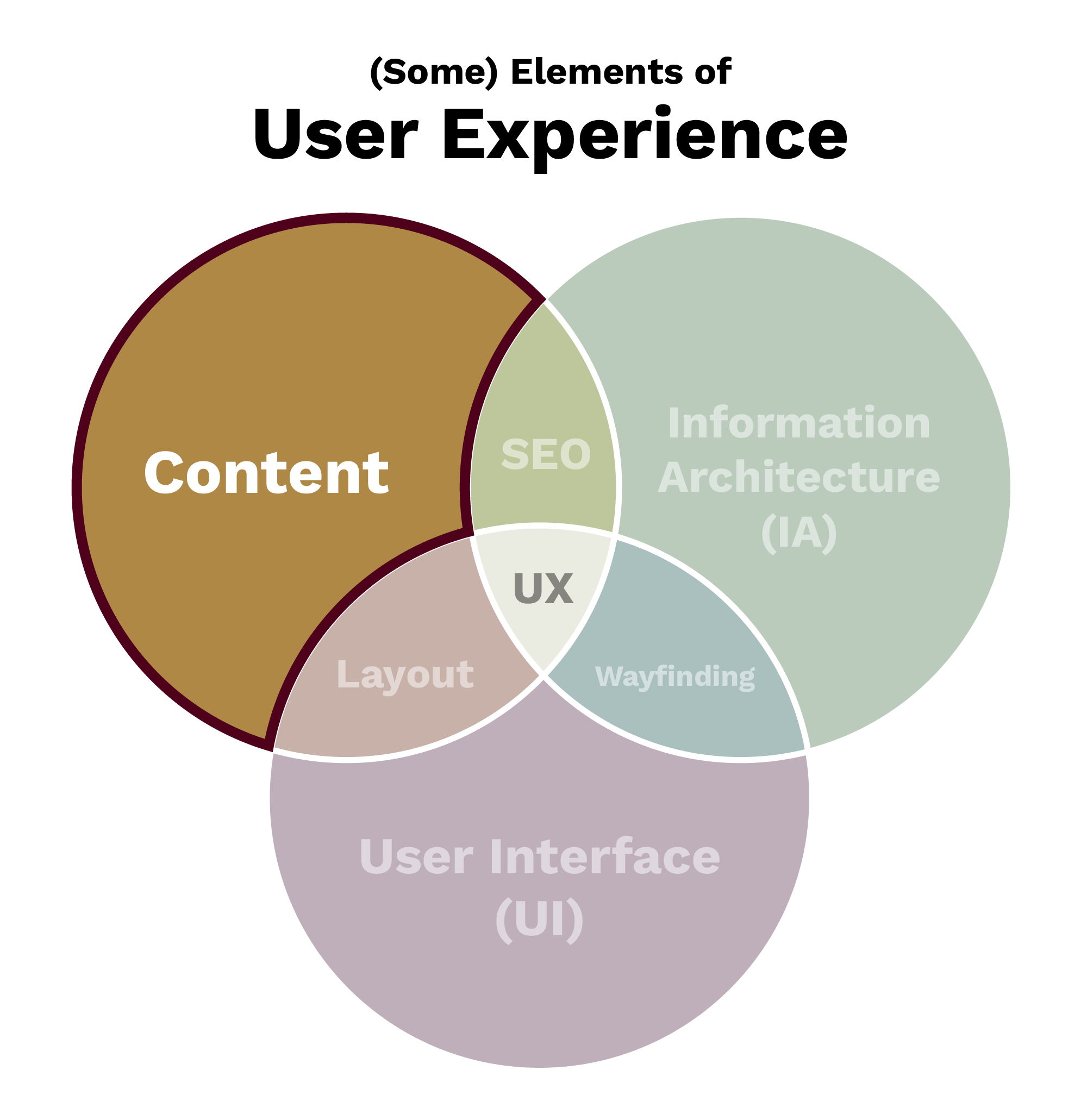
Content refers to all of the words, imagery and other media put on individual webpages. It can also refer to the content on global elements — such as footers — that appear on all pages.
Page layouts are the way content is presented on a page.
Search engine optimization (SEO) refers to how well optimized your content is to be discoverable using search engines, such as Google.
Effective Web Content
Websites exist to serve a purpose — to deliver content to a specific audience. Crafting effective content that meets the needs of both your target audience AND your business unit is key to success.
Meeting the Needs of Your Business Unit
It is highly likely that if you are creating a website on behalf of Texas A&M, you are trying to meet some business objectives — or goals — for your unit.
Some common goals on Texas A&M websites include:
- Recruiting prospective students
- Elevating a program/unit’s reputation
- Retaining current students
- Providing information for current students, faculty and staff about a business process
When creating your content, it is crucial that you are providing the information necessary to meet your objectives. The core information provided, actions prompted and content prioritization should align with your business goals.
Meeting the Needs of Your Audience
On the other hand, the way you present your content should be heavily influenced by the needs of your target audience. You could have all of the information your audience needs on a website, but if it’s not written and organized in a way they can understand, it will not meet your business objectives.
With this in mind, it is critical to prioritize the perspectives of your target audience as you:
- Determine what content is included on your site and how it is organized (information architecture)
- Write web content in a way that your audience can understand
- Optimize your content for discoverability through search engines (search engine optimization)
Learn more about writing effective web content in the AUX 110 learning path.
Content Strategy
Creating effective content relies on having a concrete content strategy.
Content strategy plans for what content you will deliver and how you will do so in both the short and long term. Your content strategy should include a plan for maintaining your content after it is published.
Effective content strategy:
- Prioritizes the primary audience and website goals
- Considers the context of web as the medium for the content
- Has a plan for updating content to keep it relevant or remove content that is no longer relevant
Keep Learning
Learn about Search Engine Optimization in Aggie UX 120 Module 1 Chapter 4.