

Search Engine Optimization
Learn about SEO, which helps make your content discoverable by people and search engines.

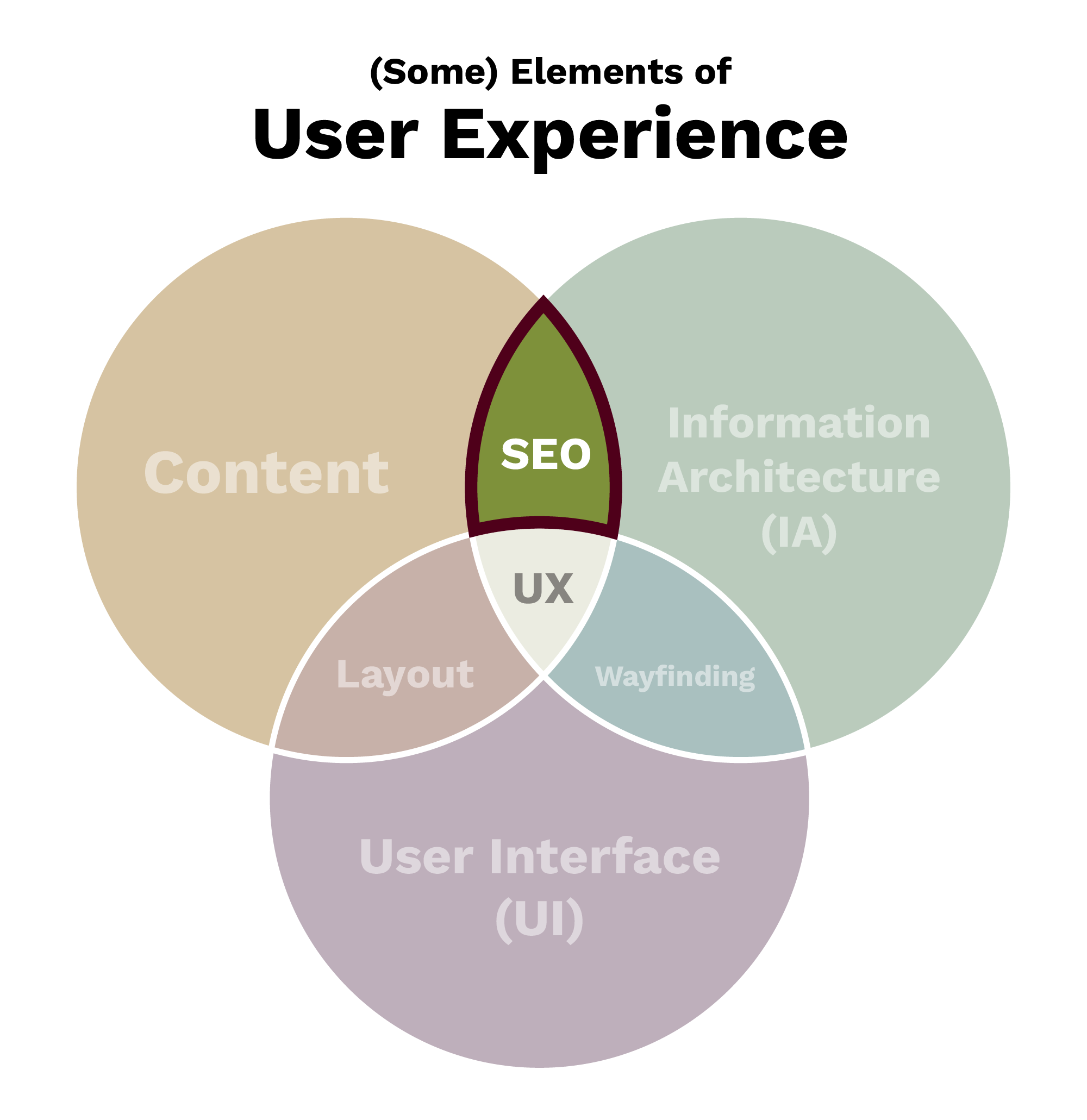
Fundamentally, search engine optimization (SEO) is about crafting the language you use in your content and information architecture so that it is discoverable by search engines.
SEO is concerned with both getting people to your site in the first place (by showing up on external search page results) and making content within a site discoverable through on-site search.
Learn more about SEO and usability
How SEO Works
Ultimately, SEO is about how relevant a computer algorithm determines a webpage is to a given key word or phrase. Effectively, the process looks like this for any given webpage:
- A webpage is published to the World Wide Web.
- Once a search engine is notified that a new page exists, it sends “robots” to crawl (or programmatically “read”) the page.
- The search engine uses algorithms to determine page rankings based on the frequency and placement of words and phrases used on the page.
- The search engine indexes (or keeps a record of) pages in a large database along with their rankings for various keywords and phrases.
- When a person uses a search engine, they enter in a keyword or phrase. The search engine then returns results of webpages according to the rank it has determined for the search query.
How to Improve Your SEO
When creating content and deciding on information architecture, it is important to think about the words and phrases your audience will use to search. Strategically using these words and phrases in key places will indicate higher relevance to search engines.
Key places to use keywords include:
- Navigation labels
- Headings
- Page titles
- Metadata/page descriptions
- Alt text
- Within the content of the page
Write Helpful Sign-Post Text
Sign-post text are pieces of text that help users orient themselves on a webpage and decide what they want to read — and what they don’t.
Common sign posts include:
- Page names (navigation labels, H1 heading and title)
- Headings and subheadings
- Linked text*
Learn more about writing helpful signpost text and writing effective link text.
*Linked text helps with the SEO of both the page it is on and the page it links to.
Use Hidden Text Strategically
There are some elements of text on webpages that are not necessarily seen on a webpage, including alt text, page titles and metadata.
Alt Text and Image File Names
Alt text is a textual alternative for people who cannot see an image. Alt text is also the primary way for a search engine to know what an image contains. Writing contextual, descriptive alt text and naming image files something meaningful (“tamu-jkw-administration-building-exterior.jpg” vs. “image_08898.jpg”) helps the SEO for both the page the image is on and the image itself.
Learn more about writing effective alt text for images.
Metadata
Metadata is textual information that is typically only seen in previews for a webpage on search engines or in social sharing sites and applications. Your metadata should concisely portray why a person may want to visit a given webpage, strategically using keywords to help a user (and search engines) know that the page is relevant.
Learn more about meta descriptions from Semrush.
Avoid Keyword Stuffing
While it is helpful to use relevant words in these places, be careful not to overdo it. These pieces of content should still make sense contextually. When you force in lots of keywords in ways that don’t make sense, you are “keyword stuffing” — a practice that will lower your SEO.
In the example below, the “bad metadata” is a demonstration of keyword stuffing.
| Good Metadata | Bad Metadata |
|---|---|
| Schedule a visit to Texas A&M University. A campus tour is the best way for prospective students and families to learn what being an Aggie is all about. | Texas A&M University campus visit in person visit tour tamu group tour virtual tour see Texas A&M campus walk around tamu |
Keep Learning
Learn about Information Architecture in Aggie UX 120 Module 1 Chapter 5.